Researchers Reconstructed the Lāhainā Fire Timeline Minute by Minute. Hawaiʻi Is Using What They Found.
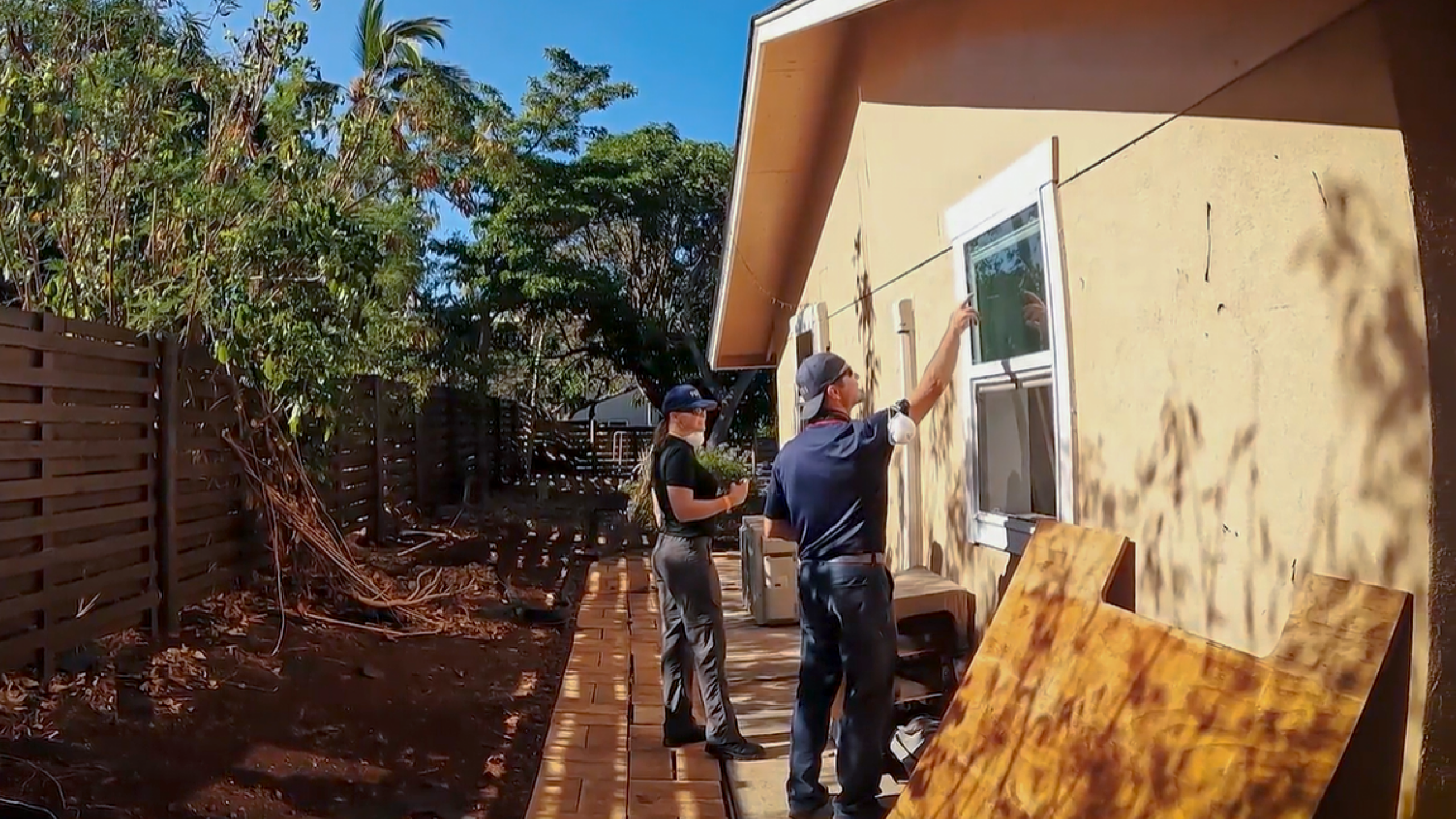
Researchers stitched radio calls, dispatch logs, vehicle GPS data, and survivors’ accounts into one record of the deadliest U.S. wildfire in more than a century. What they found brought back Hawaiʻi’s state fire marshal, and it gives every town near dry land a fire prevention list to start on.
At 2:55 p.m. on Aug. 8, 2023, a fire took off in dry grass on the slope above Lāhainā, on Maui’s west coast.
Wind pushed it downhill fast. Within about 90 minutes, it had crossed more than a mile of town and thrown embers to the waterfront. Some people fled into the ocean to survive.
By morning, 102 people were dead and more than 2,000 structures were gone. It was the deadliest wildfire in the United States in more than a century.
Many communities now ask some version of the same question: What are we going to do about wildfire?
In this article, UL Research Institutes examines how Hawaiʻi set out to answer a narrower one: What actually happened?
Building one record from thousands of pieces
Days after the fire, Hawaiʻi Attorney General Anne Lopez asked the Fire Safety Research Institute to conduct an independent review of how state and county agencies prepared for and responded to it. The institute is part of UL Research Institutes, a nonprofit safety science organization.
Disasters leave behind a flood of evidence, and much of it contradicts itself. A dispatch log puts an event at one time; a resident’s phone video shows another. Memory blurs under stress.
So the research team gathered everything it could find: radio traffic and transcripts, emergency logs, phone and text records, email, GPS data from emergency vehicles, social media posts, photos, videos, and interviews with residents and officials.
Then they checked each source against the others, one minute at a time.
The first report, released in April 2024, laid out a minute-by-minute timeline built from more than 12,000 lines of data. It starts with pre-fire events and then runs from the first report of the fire at 2:55 p.m. to 8:30 a.m. the next day.
The timeline shows the moment a grass fire became an urban conflagration, a fire that spreads from building to building. It also shows where problems arose. Low, wind-driven smoke hid the roads. Cars stalled on evacuation routes. Emergency crews were stretched across several fires on Maui at once.
The state also made the raw evidence public. The attorney general’s office posted roughly 850 gigabytes of video, audio, photos, and documents in a free online database.
Finding the factors that stacked up
The second report, released in September 2024, asked why the fire became so deadly.
To reach an answer, the team used systems analysis, a technique that traces how weather, land, buildings, agency policies, and everyday habits interact, and how strain in one part of the system spreads to the rest.
Many conditions coalesced in Lāhainā. Hurricane Dora, passing far to the south, and a high-pressure system to the north drove wind gusts of more than 80 mph across the island. Unmanaged land around town was thick with dry, fire-prone grass. Buildings were old and close together. And the networks that residents and responders relied on for communication were quickly overloaded.
The report listed 84 findings and 140 recommendations. It didn’t examine what started the fire. Maui County investigated the cause and origin separately with the federal Bureau of Alcohol, Tobacco, Firearms and Explosives.
From 140 recommendations to a short list
Long reports have a way of landing on shelves. The third report, released in January 2025, ranked the work instead: 10 top priorities for the state and 10 for the counties.
“Our objective in the Phase Three report is to provide the State of Hawaiʻi and the County of Maui with a clear roadmap to initiate progress,” said Steve Kerber, vice president and executive director of the Fire Safety Research Institute, when the report was released.
First on the state list was the reinstatement of the Office of the State Fire Marshal. Hawaiʻi dissolved its original office in 1979 and replaced it with the state fire chief role.
Other priorities included weather stations in high-risk areas, written evacuation plans, building and fire codes for neighborhoods that border wildland, and a clear owner for vegetation management outside conservation lands.
What Hawaiʻi did next
The state moved quickly. The attorney general’s office brought in the nonprofit Hawaiʻi Wildfire Management Organization to lead work on the 10 state priorities.
In June 2025, Gov. Josh Green appointed Dori Booth as state fire marshal, restoring a position that had been vacant for nearly five decades.
On July 8, 2025, Green signed House Bill 1064, which establishes the Office of the State Fire Marshal and defines its duties. The governor’s office said the law fulfills recommendations from the Phase Three report.
A second measure signed the same day, Senate Bill 223, supports wildfire prevention and land management programs. It also lets the State Fire Council require firebreaks and vegetation management on high-risk properties.
“I wish that my town was still here, that the people who died were still with us, that the people whose lives were changed and who experienced trauma from the fire had never had to go through that experience,” reflected former Lāhainā resident Ciara W.K. Kahahane. “But at the same time, I want it to be meaningful, and I think that it does have meaning — the importance that we place on it, to actually implement the recommendations that are in the report.”
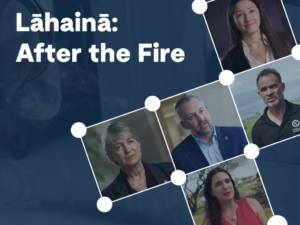
The path from investigation to implementation is also documented in Lāhainā: After the Fire, a short documentary from ULRI. It includes interviews with residents, first responders, researchers, and state officials, including Lopez, Green, and former U.S. Fire Administrator Lori Moore-Merrell.
A list for the next town
The conditions in Lāhainā aren’t unique to Maui. About 44 million U.S. homes sit in the wildland-urban interface, where neighborhoods meet undeveloped land.
In January 2025, the Palisades and Eaton fires burned through Los Angeles County. California’s governor asked the same research team to reconstruct them, and it built on the method it developed in Lāhainā.
Its October 2026 report lists 175 findings and 266 recommendations. Like Maui, the losses came from many connected systems under strain at once. The researchers also found that whether a home survives increasingly depends on conditions across the whole neighborhood.
That points to work that is unglamorous and has to start early. Someone accountable for fire safety. Land that’s actively managed. Evacuation plans written and practiced. Weather data for the area with the highest risk. Building codes written for wind-driven embers.
Hawaiʻi has started on its list. A state fire marshal is on the job, new laws are on the books, and the priorities have an owner.
Other communities don’t have to wait for their own fire to begin. The evidence from Lāhainā is public, and the questions are ready to be asked.
Sidebar: Questions to ask about your community
What the Lāhainā investigation suggests asking about your own community
Who’s in charge of wildfire safety? Hawaiʻi’s top recommendation was a state fire marshal with clear duties. Find out who holds that role where you live, and whether they have staff and funding.
Can forecasters see the wind coming? Researchers recommended weather stations in high-risk areas. Ask whether your area has them.
Is there a written evacuation plan, and has anyone practiced it? Know your routes before smoke hides them.
Who manages the dry grass and brush near homes? Unmanaged vegetation fed the Lāhainā fire. Ask who’s responsible for vacant land in your area.
Do local codes account for embers? Wind-driven embers spread fire from building to building. Check whether building and fire codes cover homes near wildland.
How will warnings reach you if phones and power fail? Overloaded networks slowed warnings on Maui. Sign up for local alerts and ask about backups.
PUBLISHED