Materials Discovery
AI accelerated labs to
expedite safety research
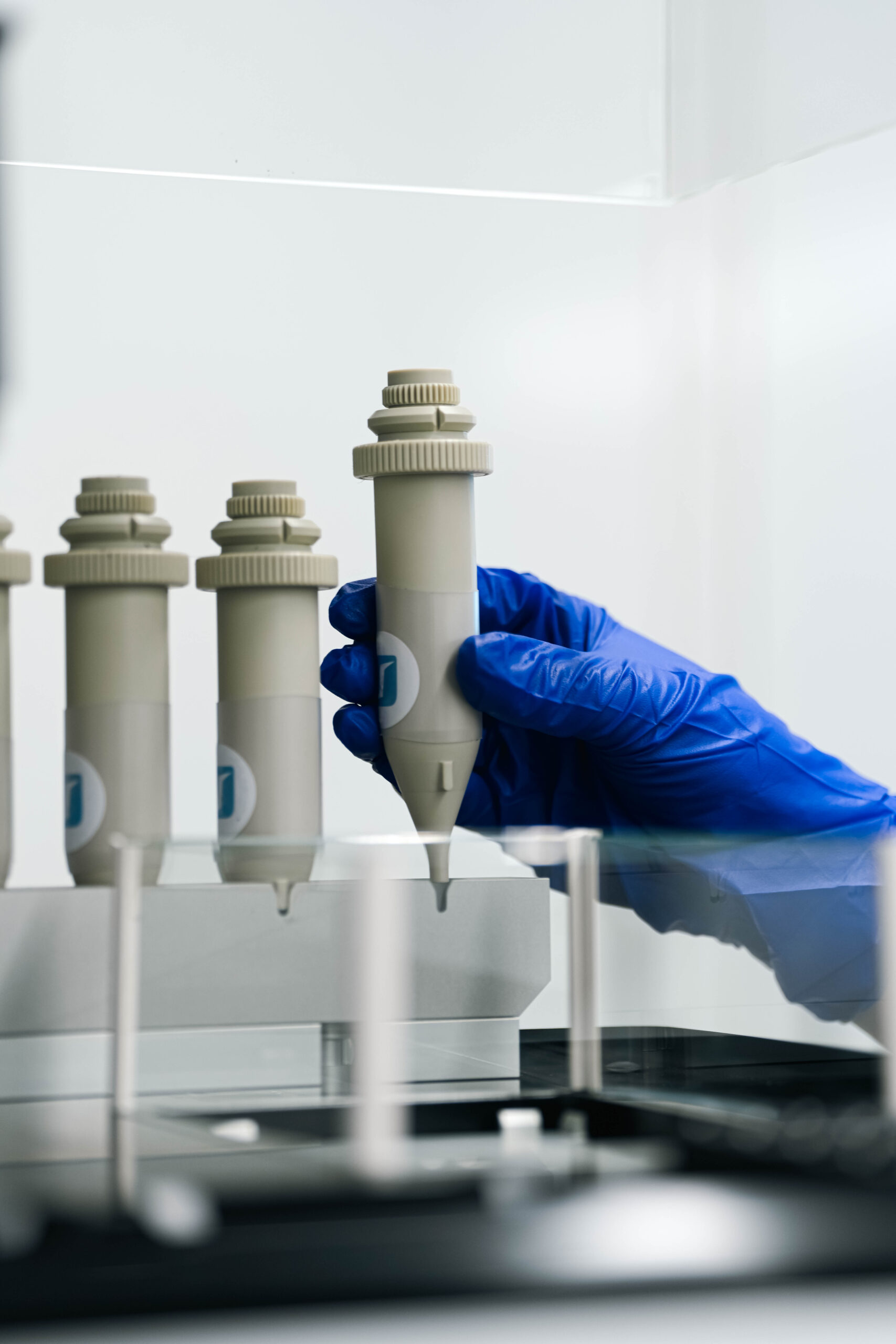
UL Research Institutes’ Materials Discovery Research Institute conducts research to discover and deploy breakthrough materials that address urgent safety challenges. We use artificial intelligence, automation, and high-throughput experimentation to accelerate the design of new materials for renewable energy and environmental remediation, while considering the implications on human health.
Discover how our researchers are accelerating materials discovery and explore more Stories of Impact from all our research institutes.
Our approach compresses discovery timelines from decades to months, turning scientific possibility into real-world impact. Our research is translated into:

Breakthrough materials for renewable energy

Eco-remediation solutions for clean air and water

Scaling discoveries into deployment
Materials Discovery Key Research Areas
Our research is driven by ULRI’s focus on solving safety challenges. We target two of the world’s most urgent needs: developing breakthrough materials for renewable energy storage and engineering eco-remediation solutions that permanently remove pollutants from our air and water. Traditional materials discovery is too slow to meet the scale of these challenges — so we built a lab designed for urgency.
Eco-remediation: Removing greenhouse gases and decontaminating water
At the Materials Discovery lab, our eco-remediation research focuses on four key areas: addressing global air quality, advanced materials for heating, cooling, and humidity control, water decontamination, and atmospheric water harvesting.
Our labs develop practical materials that address two of the world’s most urgent climate challenges: reducing greenhouse gas emissions and securing clean, reliable water resources. We design advanced materials for integration into technologies that capture or degrade airborne pollutants and greenhouse gases. This work addresses emissions that cannot be eliminated through current methods alone.
To help protect water resources, we develop materials that remove contaminants such as arsenic, chromium, and lead from drinking water and harvest fresh water directly from the air. These technologies can help strengthen resilience in communities facing water shortages, natural disasters, or aging infrastructure, while expanding access to clean water resources.
Energy generation and storage: Transitioning away from fossil fuels to renewable energy
At the Materials Discovery lab, our energy generation and storage research focuses on four key areas: AEM electrode and membrane enhancements, ORR catalyst discovery, metal reclamation across feedstocks, and polymer electrolyte membrane OER discovery.
Our research focuses on developing safe, cost-effective materials that support the transition from fossil fuels to renewable energy. Much of this work centers on green hydrogen, a clean fuel that can help power industries and transportation systems that are difficult to electrify. We’re improving the electrodes, membranes, and catalysts used in electrolyzers so hydrogen production can become more efficient, durable, and affordable at scale.
We’re also advancing materials used in fuel cells, which generate electricity from hydrogen while producing only water as a byproduct. These technologies have the potential to support cleaner vehicles and reliable backup power systems. We’re also developing improved methods to recover precious metals and minerals such as lithium, copper, and nickel from recycled products and industrial waste.
These efforts support a more resilient supply chain for batteries, electric vehicles, wind turbines, and other renewable energy technologies. By reducing cost and performance barriers for clean energy technologies, this research supports a more secure energy future.
An AI platform for breakthrough materials
The Materials Discovery Research Institute operates a fully digital, AI-native facility designed to accelerate materials discovery. By integrating data capture, automation, robotics, and advanced computing across every stage of the research process, the lab transforms traditional materials research into a rapid, real-time innovation engine.
Our researchers combine computational modeling, high-throughput experimentation, and data-driven insights to accelerate the path from idea to impact. This approach enables faster, more scalable discovery and development of advanced materials for clean energy, energy storage, and eco-remediation applications.
Built to address urgent global safety challenges, the lab helps researchers move beyond traditional trial-and-error methods and accelerate the discovery and deployment of materials that can contribute to a safer future.
Materials Discovery
News & Featured Updates
Stay up to date on the latest news and research from the Materials Discovery Research Institute.






Stay informed
Sign up for updates
Stay connected with Materials Discovery Research Institute as it works to discover and deploy new materials with the potential to address global safety challenges.
By submitting this form, I am opting in to receive communications from UL Research Institutes (ULRI) containing news and updates about its work and initiatives. I understand that I can manage my preferences at any time and agree to ULRI’s online policies.