Kindling Completes Community-Driven Fire Risk Assessment
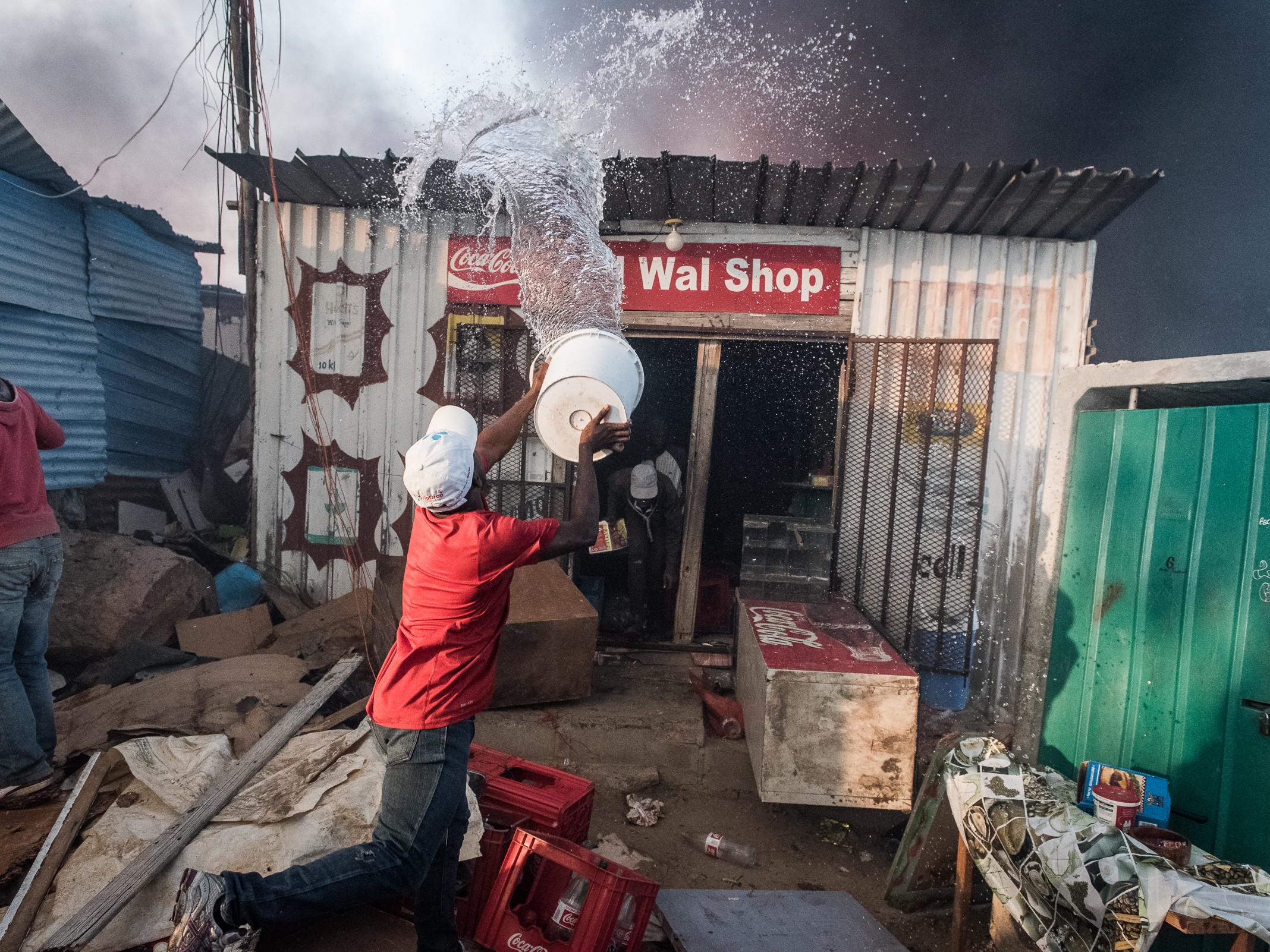
With the support of the Fire Safety Research Institute, Kindling recently completed a community‑driven fire risk assessment in Khayelitsha, an informal settlement in Cape Town. Their work showed that in communities challenged with overcrowding, unemployment, food insecurity, and violent crime, fire risk is not just a technical challenge — it’s deeply social, political, and economic.
Kindling sought to address fire safety in realistic, actionable ways, starting with a fire risk assessment conducted with the community, not for the community. They began by listening to residents and building trust through workshops and the development of a community profile, supported by local community-based researchers and an advisory committee. Over several months, residents helped map fire hazards and past fires, generating 33 problem statements that reflected the real challenges people face before, during, and after a fire — including the life-changing decisions they must make, where standard fire guidance often does not apply.
The community prioritized feasible social, physical, and advocacy‑based solutions. Education played a major role: once residents understood risks such as battery‑related ignition, they began challenging long‑held assumptions about fire causes and recognized that they could make a difference. That impact became clear when a fire occurred and newly-informed residents successfully prevented an action that would have accelerated fire spread.
The key takeaway for fire engineers is simple: technical expertise alone cannot solve problems rooted in social context. Effective fire safety requires listening, long‑term partnership, and designing within the realities communities face — an approach strengthened by investing in organizations equipped to do this work.
PUBLISHED
Tags