Educational Research Team Publishes Paper on Critical Support Structures Needed in Internships To Help Ensure Persistence in STEM Careers
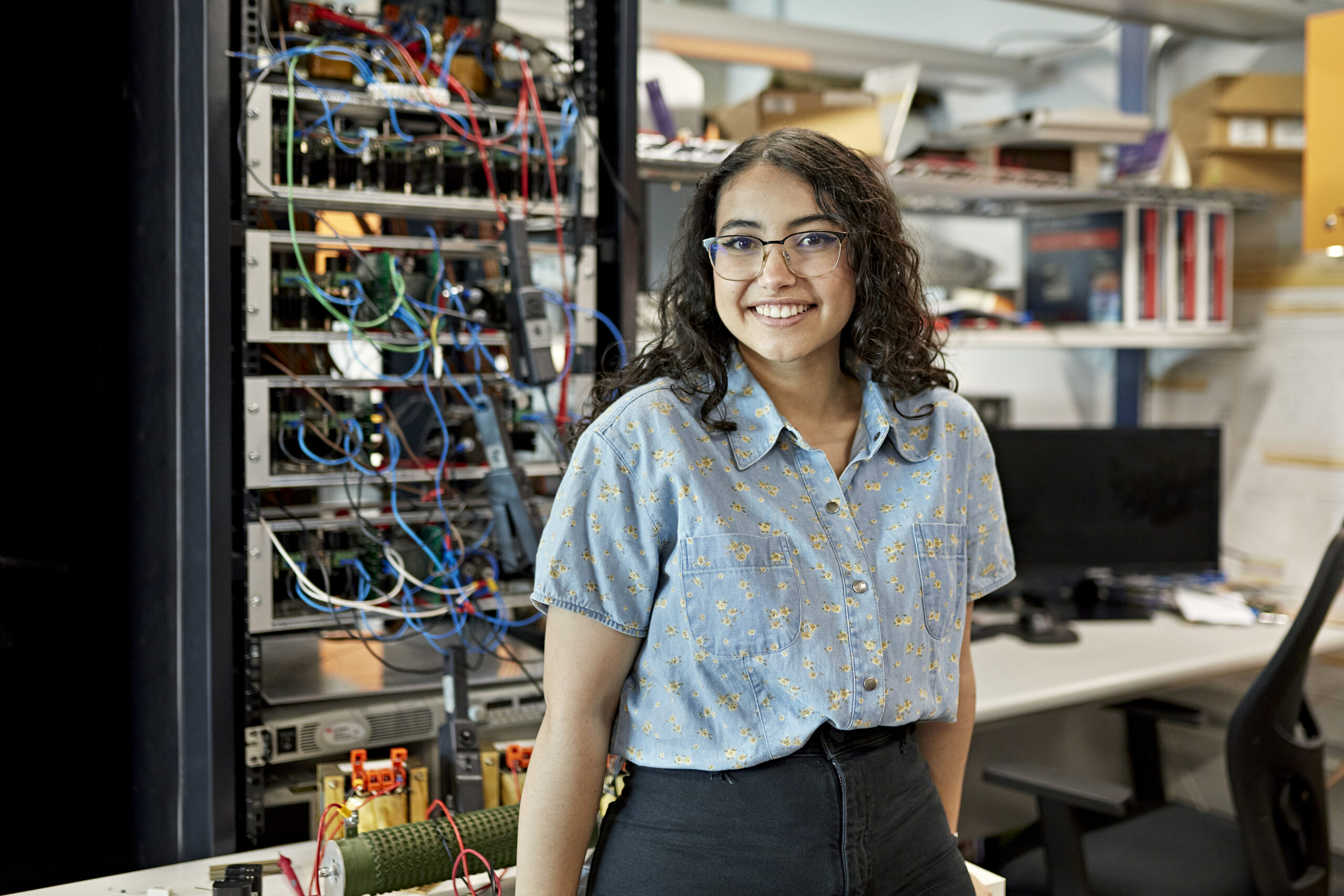
A new research study by UL Research Institutes’ Institute for Research Experiences & Education was recently published in Nature’s Humanities & Social Sciences Communications journal. The paper titled “How Science Careers Are Made: Apartment Rentals and Transit Vouchers” concludes that interns and fellows are concerned with many more aspects of an internship than the scientific work alone — noting that support structures such as housing, transportation, food, and safety all play key roles in selecting, applying, and accepting internship opportunities.
In 2022, the educational research team began by asking, “what are the experiences of young people — particularly those with excluded identities — who move through STEM internship systems?” As the study began, a theme emerged around logistical or administrative needs for interns and how these support structures are critical to a student’s choice to pursue and/or accept an internship within an organization. Additionally, these factors can impact a student’s feeling of belonging with an organization, which can hinder or enable them throughout their internship and into their career.
The study involved convening 12 focus groups with undergraduate and recently graduated students majoring in STEM to understand what these students want to see in their internship and how that encourages them to persist in STEM careers. Through long-form interviews with 45 students across 25 total disciplines — and representing 31 colleges and universities spanning geographies across the United States — much of the dialogue revolved around the supports and barriers they’ve observed or experienced in internships.
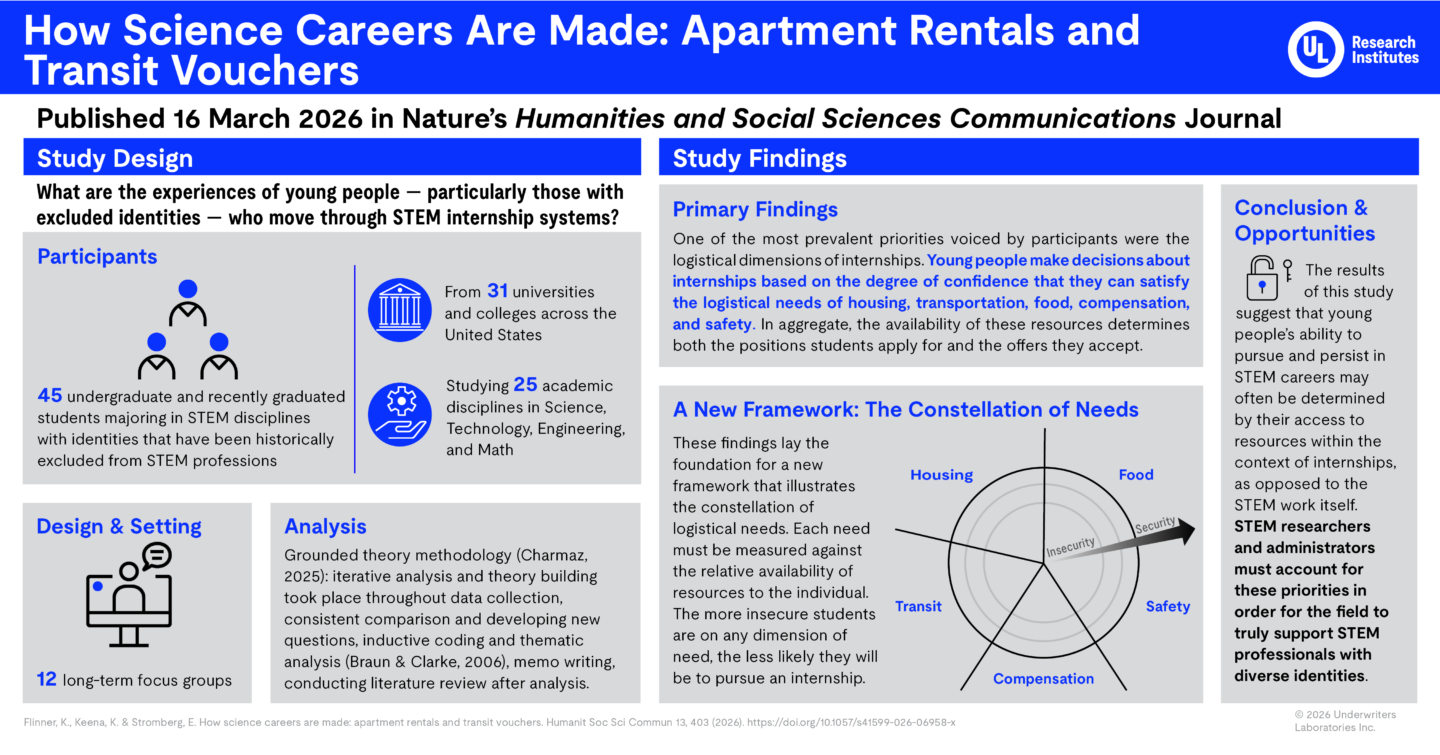
“Repeatedly, these students emphasized that key factors in their job search, as well as which internships they applied for, were logistical needs that have little to do with the content of the internship itself,” said Kate Flinner, senior research and evaluation manager for ULRI’s Institute for Research Experiences & Education, who helped lead the study. “Housing, transportation, food, safety, and compensation were all noted by students as critical to their internship selection. And within each of these categories, it became clear in our research that each of these factors are layered and integrated based on the type of support offered, and its potential value — all of which play a role in considering an internship opportunity and the overall internship experience.”
Showing that logistical supports are critical to student experiences and career trajectory, the study’s findings lay the foundation for a new framework that illustrates the constellation of logistical needs. Each need must be measured against the relative availability of resources to the individual, and the more insecure students are within any dimension of need, the less likely they will be to pursue an internship.
The study concludes that perceived lack of concern for addressing young people’s needs can influence opinions of an individual employer as well as an intern’s view of the STEM field as a whole — reflecting the study’s emergent finding that logistical needs like compensation, safety, and housing security were related to interns’ ability to feel adequately autonomous, competent, and legitimate in their professional settings.
The paper also states that “other research has shown belonging as an important predictor of internship — but our findings suggest that satisfaction is fueled by much more than academics, grades, or treatment by supervisors and colleagues, courses, or other work-related activities. A sense of un/belonging can be a culmination of everything that hinders or enables students to enter these settings in the first place. We argue these hinderances and enablers in STEM internships include housing, transportation, food, and compensation.” With this in mind, the study recommends that STEM researchers and administrators must account for these priorities in order for the field to truly support STEM professionals with diverse identities.
Read the full paper “How Science Careers Are Made: Apartment Rentals and Transit Vouchers” in Nature’s Humanities & Social Sciences Communications journal.
PUBLISHED
Tags