Standards Coming to Life: Using Standards Academy to Humanize Safety
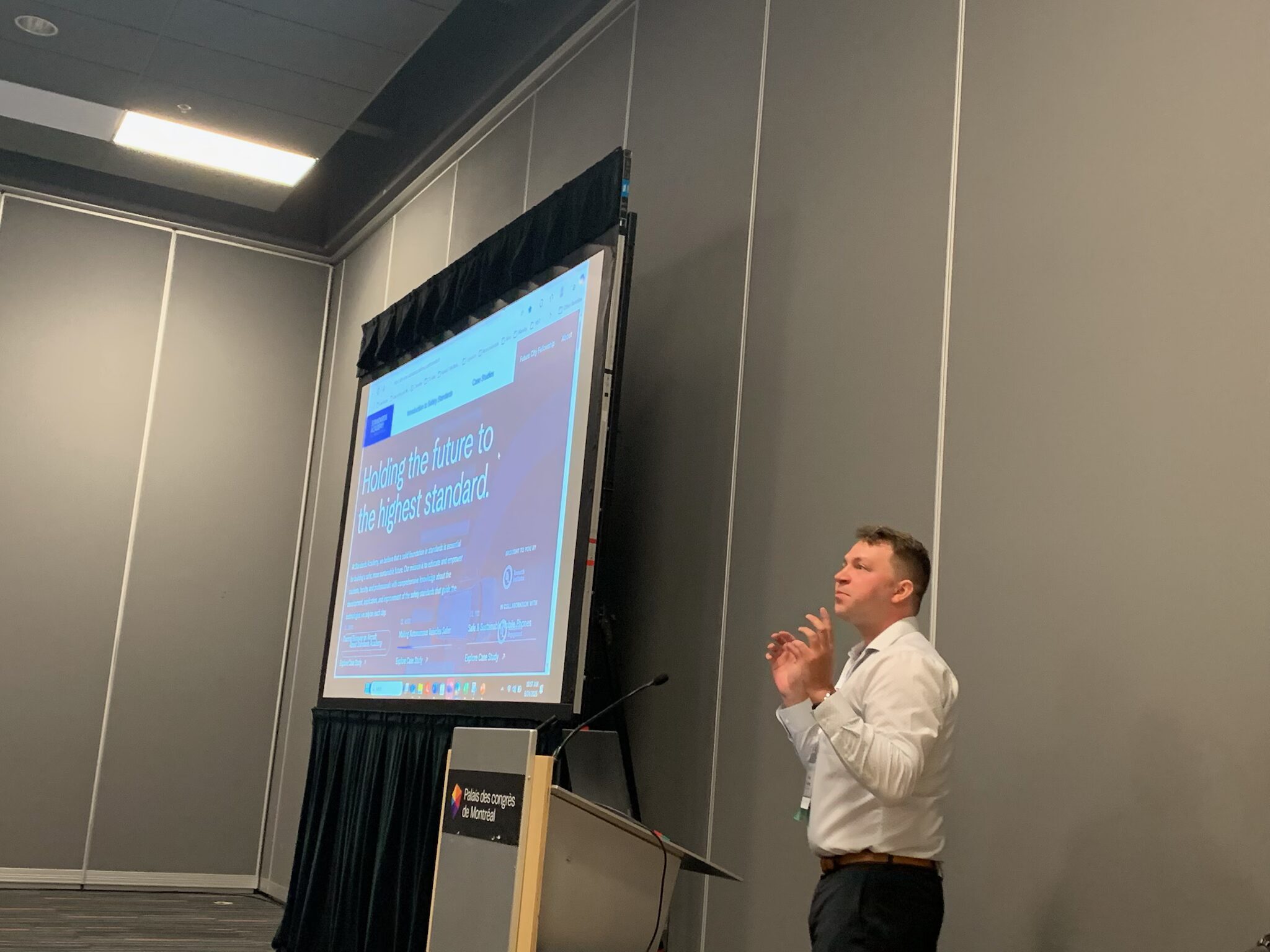
Education Specialist Daniel Sternberg discusses how he’s bringing safety standards education to students, helping them bridge the gap between classroom theory and real-world application.
Standards Academy offers college students an introduction to the people, processes, and decisions behind safety standards, and the education team in ULRI’s Institute for Research Experiences & Education is helping make that introduction.
Standards Academy, which launched last year, is an open-access standards education platform created in close collaboration with UL Standards & Engagement. Developed by higher education experts in the Institute for Research Experiences & Education, Standards Academy aims to fill the critical gap of standards education in college.
Designed primarily for early college students, the platform is intended to be many students’ first meaningful exposure to safety standards, an area often missing from early undergraduate engineering education. Education Specialist Daniel Sternberg said he and the postsecondary education team wanted Standards Academy to help students see standards not as static documents, but as living, human processes.
Sternberg worked to develop several case studies for Standards Academy, working alongside colleagues at ULSE to determine how to best tell the story of each featured safety standard, the development process for standards, and make it approachable to college-age students.
For example, his case study on UL 5800, the Standard for Safety for Battery Fire Containment Products, focuses on products designed to mitigate the risks of thermal runaway on airplanes. From ideation to publication, the case study development process took him more than a year, including early work to define the educational approach and determine how best to present complex safety concepts to students.

“I wanted students to think of themselves as practitioners in the industry, and the requirements that go into the safety engineering that keeps air travel moving,” Sternberg said. “Beyond technical knowledge around one specific aspect of airline safety, I want students to recognize the importance of collaboration, communication, and ethical responsibility for safety throughout their careers.”
Sternberg said that the case study was designed to benefit students inside and outside the classroom. By incorporating Standards Academy in the classroom, students can connect engineering concepts to real-world constraints in risk mitigation, alignment to regulatory bodies, and collaboration across industries. This specific case study encourages students to think critically about why requirements exist and how the requirements are made based on real-world data and safety challenges.
Outside the classroom, students can gain a foundation in systems thinking that supports their readiness for internships and early career roles.
“It feels especially meaningful to create cases that faculty can use to help their students be more critical about the world around them, to ask more meaningful questions, and to see real-world data and decisions show up in the places they inhabit,” he said. “This case study gives faculty a powerful tool for connecting lived experience with engineering and engineering responsibility.”
Sternberg hopes the case studies on Standards Academy help students see standards as fundamentally human.
“Standards are living, human-driven processes that are always evolving,” he said. “They change as technologies, global interests, and real-world circumstances change. I want students to see the people behind the decisions: the collaboration, design, risk, and safety considerations that go into every requirement.”
PUBLISHED
Tags