UL Research Institutes Announces Judy Jeevarajan, Ph.D., as Vice President and Distinguished Scientific Advisor
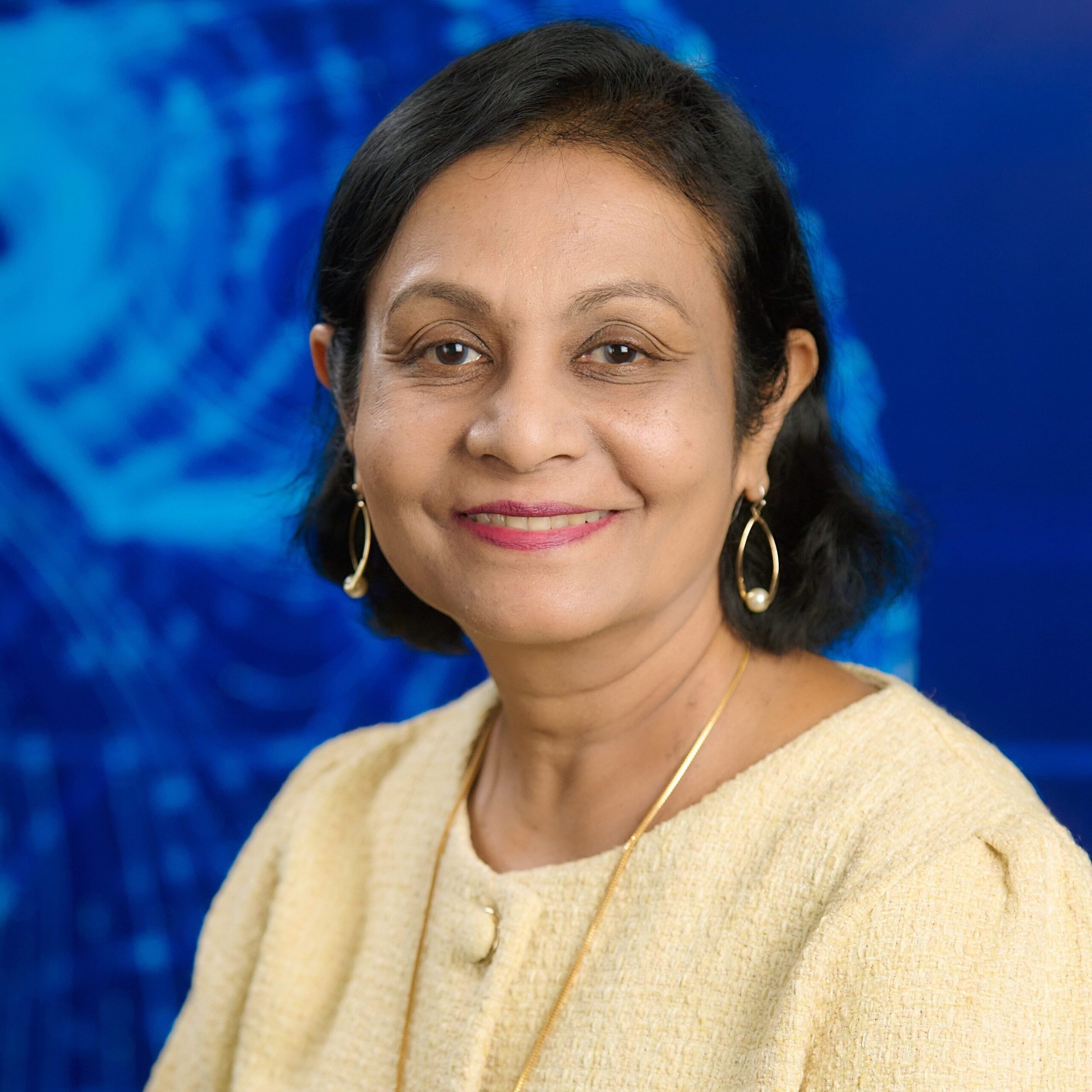
EVANSTON, ILL. (March 10, 2026) – UL Research Institutes today announced that Judy Jeevarajan, Ph.D., has been appointed to the position of vice president and distinguished scientific advisor. In this newly created leadership role, reporting to Chris Cramer, Ph.D., chief research officer, Jeevarajan will continue to contribute to shaping ULRI’s scientific trajectory, mentoring researchers across the Electrochemical Safety Research Institute, and guiding ULRI’s long-term research direction for critical programs in battery and energy storage safety, electrochemical science, and global standards development.
With this appointment, ULRI has initiated a search for a new leader for the Electrochemical Safety Research Institute. Jeevarajan will also continue serving as vice president and executive director until a new institute leader is identified and onboarded.
Of her appointment, Cramer remarked, “Judy is an extraordinary scientific leader whose expertise in battery safety and electrochemical systems is recognized around the world. Her ability to connect rigorous research with real-world safety impacts makes her indispensable to UL Research Institutes. As our distinguished scientific advisor, she will guide critical scientific priorities, mentor the next generation of researchers, and continue strengthening our role in shaping global battery safety standards. I am deeply grateful for her leadership and excited for the continued impact she will have in this expanded role.”
Jeevarajan brings more than 30 years of experience in battery chemistry, with a deep, widely recognized focus on lithium-ion technologies. Throughout her career, she has become an influential voice in improving the safety and reliability of global energy storage systems.
Her leadership extends far beyond ULRI. She serves prominently within the international standards community, including her appointment as Chair of the IEC Technical Committee 21 Subcommittee 21A, a role entrusted to experts who shape global battery and energy storage standards.
Jeevarajan’s work has also had a significant influence across academia, industry, and government. She has delivered more than 250 presentations and contributed three book chapters on battery safety, advocating for safer chemistry, stronger system-level protections, and evidence-based policy approaches. Her expertise is regularly sought in high-profile forums, including congressional hearings and global clean energy conferences, where she addresses emerging risks and the innovations needed in the ever-changing, growing field of batteries and new energy sources such as hydrogen.
As a thought leader, she continues to represent ULRI in global dialogues, including discussions on energy storage safety and emerging technology standards with groups such as the India Energy Storage Alliance and the NetZero Energy Transition Alliance.
In her new capacity, Jeevarajan will deepen collaboration with UL Standards & Engagement, the International Electrotechnical Commission, SAE (Automotive and Aerospace), and other relevant global standards bodies. Her guidance will continue bolstering ULRI’s leadership in:
- Battery safety research and testing methodologies
- Fire suppression, prevention, and system-level safety for EV and storage applications
- Standards development for next-generation battery chemistries and systems
- Global policy and best practice guidance for energy storage safety
Her technical rigor, global influence, and history of cross-sector collaboration make her exceptionally well-positioned to continue advancing ULRI’s mission of working for a safer world.
About UL Research Institutes
UL Research Institutes is an independent, nonprofit organization advancing public safety through scientific discovery. Since 1894, we’ve worked to build a safer, more secure, and sustainable future. Our researchers investigate critical risks — from fire safety and chemicals to energy storage, digital privacy, and emerging materials — through rigorous, unbiased science. We collaborate globally and share our findings openly to inform standards, policy, and public understanding, while also cultivating the next generation of safety scientists through innovative educational programs and research experiences. As part of a broader safety ecosystem, we operate independently from UL Standards & Engagement and UL Solutions, while contributing to a shared mission: working for a safer world. Discover more at UL.org.
PUBLISHED
Tags