UL Research Institutes to Present Battery Safety, Sodium-Ion, and Recycling Research at the 250th Electrochemical Society Meeting
Technical program addresses thermal-runaway mitigation, sodium-ion risk assessment, and battery recycling diagnostics
HOUSTON (Oct. 22, 2026) — Leaders and research scientists from UL Research Institutes’ Electrochemical Safety Research Institute will present insights and findings at the 250th Meeting of The Electrochemical Society from Oct. 25-29 in Calgary, Canada. The team’s scientific research focuses on challenges facing battery manufacturers, integrators, and end users, including limiting lithium-ion thermal-runaway propagation, characterizing sodium-ion safety and emissions, and strengthening recycling and failure-analysis methods.
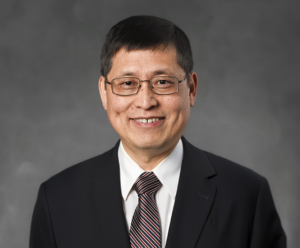
“Scaling electrification requires batteries that deliver not only higher performance but also predictable safety across their full lifecycle,” said Chao-Yang Wang, Ph.D., vice president and executive director of the Electrochemical Safety Research Institute. “At the ECS Meeting, our researchers will share data, methods, and insights that can help the industry evaluate emerging chemistries, reduce failure risk, and accelerate the development of safer, more reliable energy-storage systems.”
The ECS Meeting convenes battery scientists, engineers, manufacturers, and technology developers to exchange research with direct implications for cell design, testing, scale-up, and commercialization.
The institute’s research is relevant to stakeholders across the energy storage and energy generation value chains, including cell manufacturers, battery and energy storage system developers, automakers, hydrogen technology providers, safety engineers, policymakers, standards organizations, and recyclers.
Presentations at the ECS Meeting are organized across three areas: thermal runaway mitigation in high-energy lithium-ion batteries; sodium-ion battery safety and emissions characterization; and battery recycling and failure diagnostics. Researchers from the Electrochemical Safety Research Institute will share their expertise on each of the three topics.
Thermal Runaway Mitigation in High-Energy Lithium-Ion Batteries
These studies examine materials, designs, and cell conditions that can reduce propagation risk while supporting higher energy density and faster charging for electric vehicle and stationary-storage applications.
- Chao-Yang Wang, Ph.D., vice president and executive director (invited): “Safety of Energy-Dense Lithium Batteries”
- Judy Jeevarajan, Ph.D., vice president and distinguished scientific advisor at UL Research Institutes (invited): “Materials and Designs Studied to Prevent Propagation of Thermal Runaway in Small Lithium-Ion Modules”
- Vallabha Rao Rikka, Ph.D., lead research scientist: “Rapid SEI Formation Enabled by Flame‑Retardant Ionic Salts for Fast‑Charging Ni‑Rich NMC Lithium‑Ion Cells”
Sodium-Ion Battery Safety and Emissions Characterization
As sodium-ion technology moves toward broader commercial use, this research provides data on cell and module behavior, thermal-runaway emissions, and the influence of state of charge — key inputs for product design, testing, and risk management.
- Judy Jeevarajan, Ph.D.: “Safety of Commercial and Custom-Made Sodium-Ion Cells and Small Modules”
- Vinay Premnath, director of safety research: “Characterization of Particulate and Gaseous Emissions from Thermal Runaway of Sodium-Ion Cells”
- Avijit Karmakar, Ph.D., research scientist: “State-of-Charge Implications on Thermal Runaway of Sodium-Ion Cells and Modules”
Battery Recycling and Failure Diagnostics
Research in this area evaluates practical recycling processes and post-mortem protocols that can improve material recovery, produce more consistent failure data, and support battery-lifecycle decisions.
- Devashish Salpekar, Ph.D., research scientist: “Multi-Use of Salt Solutions in the Recycling of Lithium-Ion Cylindrical and Pouch Cells”
- Frederick Gray, research scientist: “Impact of Electrode Washing Protocols on Post-Mortem Diagnostics for Lithium-Ion Battery Failure Analysis”
About the Electrochemical Safety Research Institute
The Electrochemical Safety Research Institute, part of UL Research Institutes, advances the science and engineering needed to make electrochemical energy storage and conversion safer, more powerful, and more sustainable. By combining first-principles science, advanced characterization, accelerated testing, and system-level modeling, the Electrochemical Safety Research Institute seeks not only to understand how energy technologies fail, but to anticipate their limits, engineer out their risks, and accelerate the transition to a safe, resilient, and sustainable energy future.
About UL Research Institutes
UL Research Institutes is a nonprofit research organization dedicated to advancing public safety through safety science. Building on the UL legacy of working for a safer world since 1894, UL Research Institutes conducts rigorous, independent research, drawing on expertise across fire safety, electrochemical safety, chemical insights, materials discovery, digital safety, and research experiences and education, to prevent harm and save lives. UL Research Institutes publishes its findings openly and works to guide standards bodies, policymakers, and communities in translating scientific insight into decisions, behaviors, standards, and systems that protect infrastructure and people.
PUBLISHED