Protecting Your Home and Health from Wildfire Smoke
How wildfires lead to poor air quality
Wildfires have always had a natural role in our ecosystem. But today, wildfires are bigger, burning longer, causing more damage, and impacting public health more than ever before due to prolonged smoke exposure.
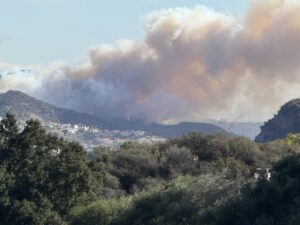
As wildfires burn, they release emissions, such as particulate matter and potentially toxic chemicals, into the atmosphere. These pollutants combine to form a massive cloud of smoke called a smoke plume. A wildfire plume can travel over 1,000 miles, affecting the air quality globally. Therefore, the consequences of wildfire emissions are not limited to the local community; they can impact large areas of the U.S. as well as the globe, affecting millions of people.
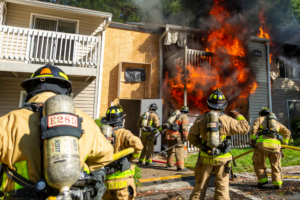
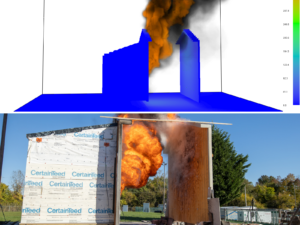
While a traditional wildfire can be a significant problem, it can quickly turn into a disaster when it meets the wildland urban interface, also known as the WUI. Within the WUI, neighborhoods and developed land meet forests and wildlands. When a wildfire reaches the WUI, it doesn’t just burn trees. It burns homes, cars, and synthetic materials that release far more toxic chemicals than natural vegetation alone.
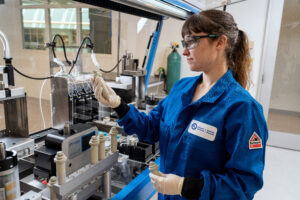
UL Research Institutes’ Chemical Insights investigates WUI wildfires and their effects on human health and the built environment — and provides the downwind toolkit to help communities reduce exposure and improve indoor air quality. This toolkit is meant for individuals located downwind of a wild/WUI fire seeking to reduce their exposure to hazardous smoke and pollutants. It offers scientific guidance for safeguarding human health that focuses on protecting the indoor environment.
It is not intended to offer guidance for those living in close proximity to a burning wildfire that may need to evacuate or take additional fire‑related safety precautions.
Follow your local evacuation guidelines if you’re impacted by a wildfire, but if you are not in an evacuation zone or cannot leave, our guide can help provide recommendations for mitigating respiratory wildfire risks.
Why is wildfire smoke so harmful?
As wildfires encroach on and burn in the wildland-urban interface, they release a massive smoke plume that contains a potentially dangerous mixture of chemicals and microscopic airborne particles that can travel over 1,000 miles and damage your health long after the fire is out.
This complex mixture of hazardous air pollutants can contain:
- Volatile organic compounds (VOCs) such as benzene and formaldehyde.
- Semi-volatile organic compounds (SVOCs) such as polycyclic aromatic hydrocarbons (PAHs).
- Airborne particles, also known as particulate matter, such as PM10 and PM2.5.
Today’s wildfires aren’t the same as naturally occurring forest fires. When the fire involves human-made structures and materials, the smoke may also contain:
- Metals and halogenated organic compounds from building materials and electronics.
- Many more unknown, data-poor chemicals that Chemical Insights is investigating.
How bad air quality from wildfires can affect your health
Wildfire smoke can irritate nearly every system in the body, and symptoms can appear even when the air doesn’t look visibly smoky. Health effects of wildfire emissions may include:
- Irritation of the eyes and respiratory tract.
- Respiratory effects (e.g., bronchitis, reduced lung function, and asthma attacks).
- Respiratory symptoms (e.g., coughing, wheezing, and difficulty breathing).
- Cardiovascular effects (e.g., heart failure and stroke).
- Increased risk of premature death.
How to monitor air quality conditions during a wildfire
At Chemical Insights, we recommend continuously monitoring three key factors to know if you need to take action:
- Indoor air quality (IAQ) using any indoor air sensor(s) in your home or building.
- Outdoor air quality using resources like the U.S. Environmental Protection Agency’s AirNow.gov. When conditions are changing rapidly, use resources such as Smoke Advisories (AirNow.gov) or Real-Time Air Quality Map (PurpleAir).
- The local weather forecast.
What to do when wildfire smoke affects air quality
When outdoor air quality is impacted by wildfire smoke, taking quick mitigatory actions to reduce your exposure to harmful particulate matter and VOCs can help reduce wildfire smoke exposure. When outdoor air quality is reported to be moderate (AQI 51-100), take the following actions:
- Close all windows and doors.
- Turn on interior exhaust fans (e.g. bathroom and kitchen fans).
- If available, run the heating, ventilation, and air conditioning (HVAC) system in recirculation mode only.
- Run a portable air cleaner and/or DIY air cleaner.
- Avoid activities that may introduce additional particulate matter, like burning candles, operating 3D printers, smoking, vaping, or cooking.
Use the Air Quality Index (AQI) to decide when to close windows and doors, limit time outdoors, and run filtration. Check AQI updates frequently during smoke events, follow local health advisories, and adjust your actions as conditions change.
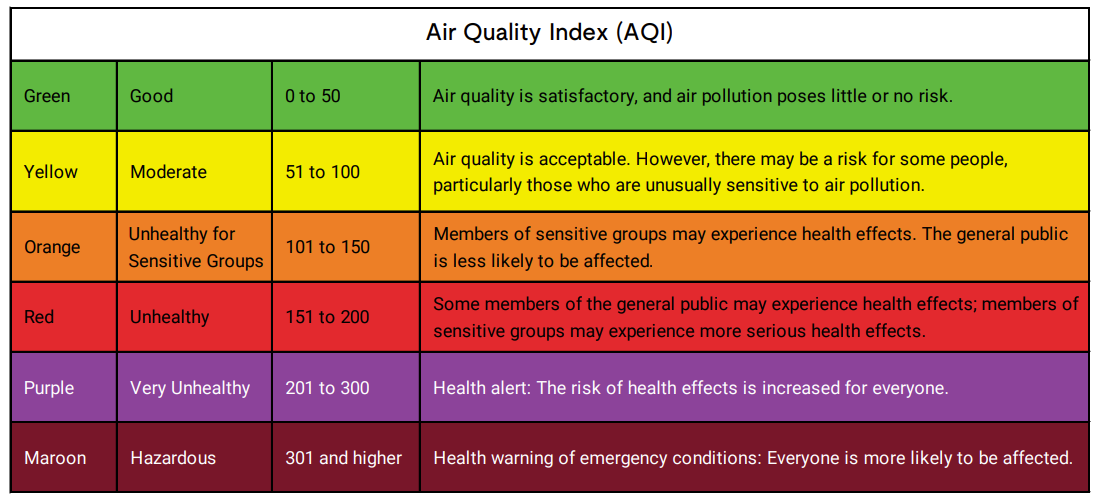
Limit the intensity and duration of outdoor activities when the AQI reaches a moderate level (51–100 AQI). When possible, cancel outdoor activities when the AQI reaches an unhealthy or hazardous level (≥ 151 AQI). If canceling outdoor activities is not possible and AQI levels exceed 300, the U.S. EPA suggests wearing a NIOSH‑approved P100, N95 mask, or KN95 mask to limit exposure to PM2.5. These masks do not filter out ozone or nitrogen and sulfur oxides (NOx, SOx).
How to protect your home from wildfire smoke emissions
Exposure to pollutants occurs in many different ways (breathing, swallowing and touching) and varies depending on your proximity to the wildfire (regional, or continental). Strategies for protecting your health from wildfire emissions focus on limiting exposure to outdoor air and safeguarding the indoor environment by cleaning the air with high-performance filtration and removing settled dust. Cleaning both the air and settled dust within an indoor environment (such as a home or business) can significantly reduce exposure risks to the pollutants that wildfires can bring to an area.
- Upgrade your HVAC filters to MERV 13 or higher, if your systems can handle that level of filtration.
- If MERV 13 filter upgrades are not available, use portable air purifiers with high-efficiency particulate air (HEPA) filtration. In some cases, it may be beneficial to use both strategies.
- Clean settled dust on all indoor surfaces after the wildfire has settled.
DIY air purifier for wildfire smoke
A DIY air cleaner is an affordable and effective alternative to commercially available air cleaners. Preliminary tests conducted by Chemical Insights researchers show that DIY air cleaners are effective at removing particles indoors and are comparable to commercially available air cleaners.
The simplest DIY air cleaner construction utilizes affordable supplies readily available at a home improvement store.
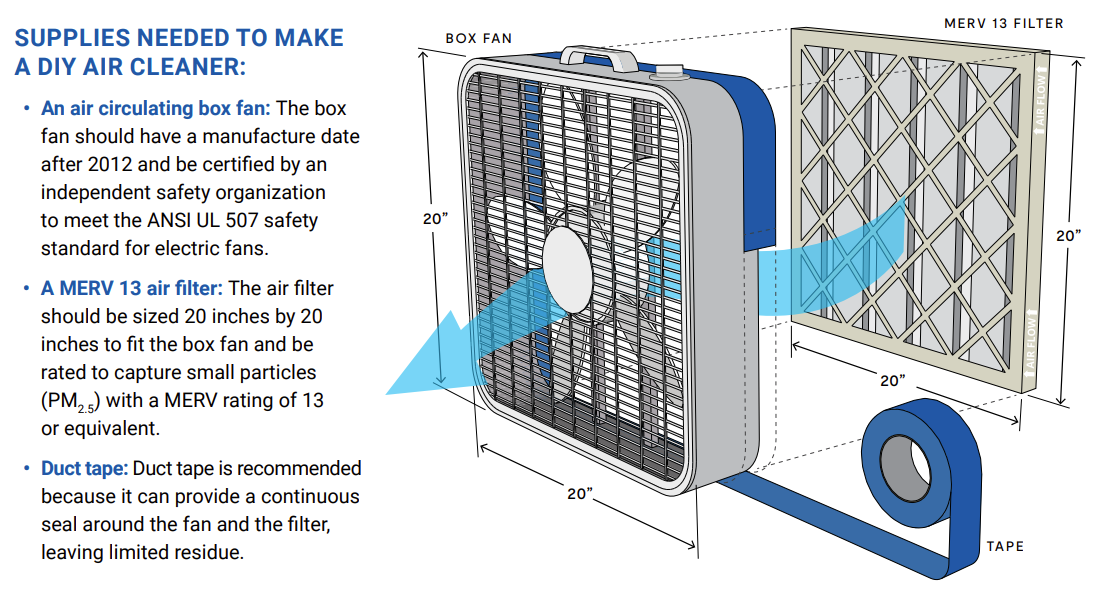
How to assemble a DIY air purifier for wildfire smoke:
- Place the front of the fan on the floor.
- Place the air filter squarely against the back of the fan. Make sure that the arrow indicating the direction of airflow is pointing towards the back of the fan (or the side that sucks air in).
- Use duct tape to securely attach the filter on all four sides. The tape should be continuous with no gaps.
Once assembled, the DIY air cleaner is immediately ready for use.
Use the air cleaner (DIY or commercial) in the room you spend the most time in. Operate the fan in a clear, open space and ensure the fan is on the ground and has good air movement around it. Keep curtains or any loose material away from it and keep windows and exterior doors closed if feasible. Provide safe power: Do not overload the circuit and unplug the fan when it is not in use. Ensure good air flow: Change filters every three months at a minimum and more frequently during and after a smoke event. Make sure the fan and motor are clean: Do not use the fan if there are any signs of damage.
Stay prepared — before, during, and after wildfire smoke
Monitoring AQI, sealing openings, filtering indoor air, and cleaning settled dust can help reduce exposure and support recovery. Use a clean air room with a portable or DIY air cleaner when smoke is present and ventilate when outdoor air improves.