Retired NASA Engineer Drives Impact in Safety Science Research
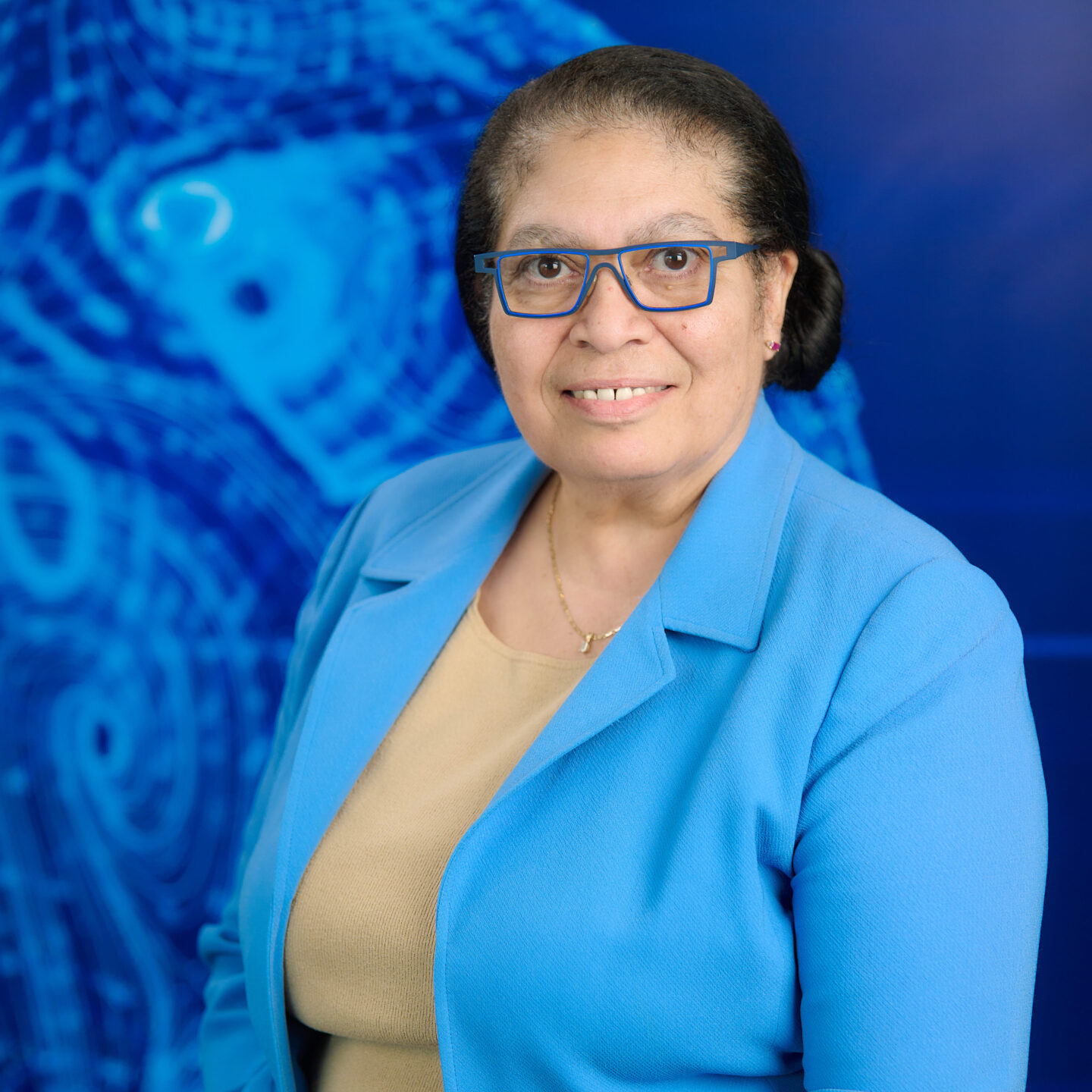
Elizabeth Smith’s engineering career has spanned more than 40 years — from working for NASA’s Space Station Program to advancing safety science at UL Research Institutes.
- Smith played a key role in building the International Space Station and developing innovative hardware still in use today.
- At ULRI, she has managed the integration of over $9 million in lab equipment and contributed to the digital transformation of equipment lifecycle management.
- Smith has received national recognition for her career contributions as a woman of color in engineering, including the BEYA 2026 Science Spectrum Trailblazer Award.
Few careers transcend time and space.
However, for Elizabeth Smith, an engineer and avid problem solver, her career has done just that. Smith spent 40 years working for NASA, including at its Space Station Program Office, before joining UL Research Institutes, a safety science research organization.
“I’ve just focused on doing the work, making it work and moving on to the next problem,” she said. “That mindset has helped carry me through some of the most complex engineering challenges.”
Engineer launches career at NASA; lands at ULRI
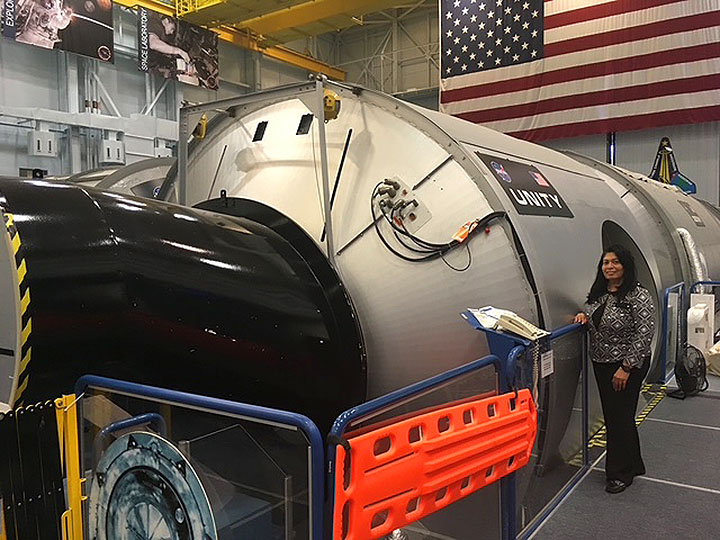
“Complex,” might be an understatement when describing the engineering challenges Smith has conquered: From 1985 to 2022, she served as a systems engineer in a variety of capacities at NASA’s Johnson Space Center in Houston. Ultimately, she helped build the International Space Station, a permanently crewed, multinational laboratory orbiting 250 miles above Earth.
With deep expertise across thermal, electrical, mechanical, and life-support systems, Smith worked across multiple disciplines to develop hardware innovations — some of which continue to operate on the space station today. During Smith’s time at NASA, she said she was affectionately known as the “space station gadget girl.”
“Large, complex systems are my specialty,” she said. “The more complex it is, the easier it is for me to figure out.”
According to Smith, her ability to solve complex problems is equally important in her current role as the senior program manager of systems engineering at ULRI. She oversees the strategic acquisition and lifecycle management of critical laboratory equipment across the organization.
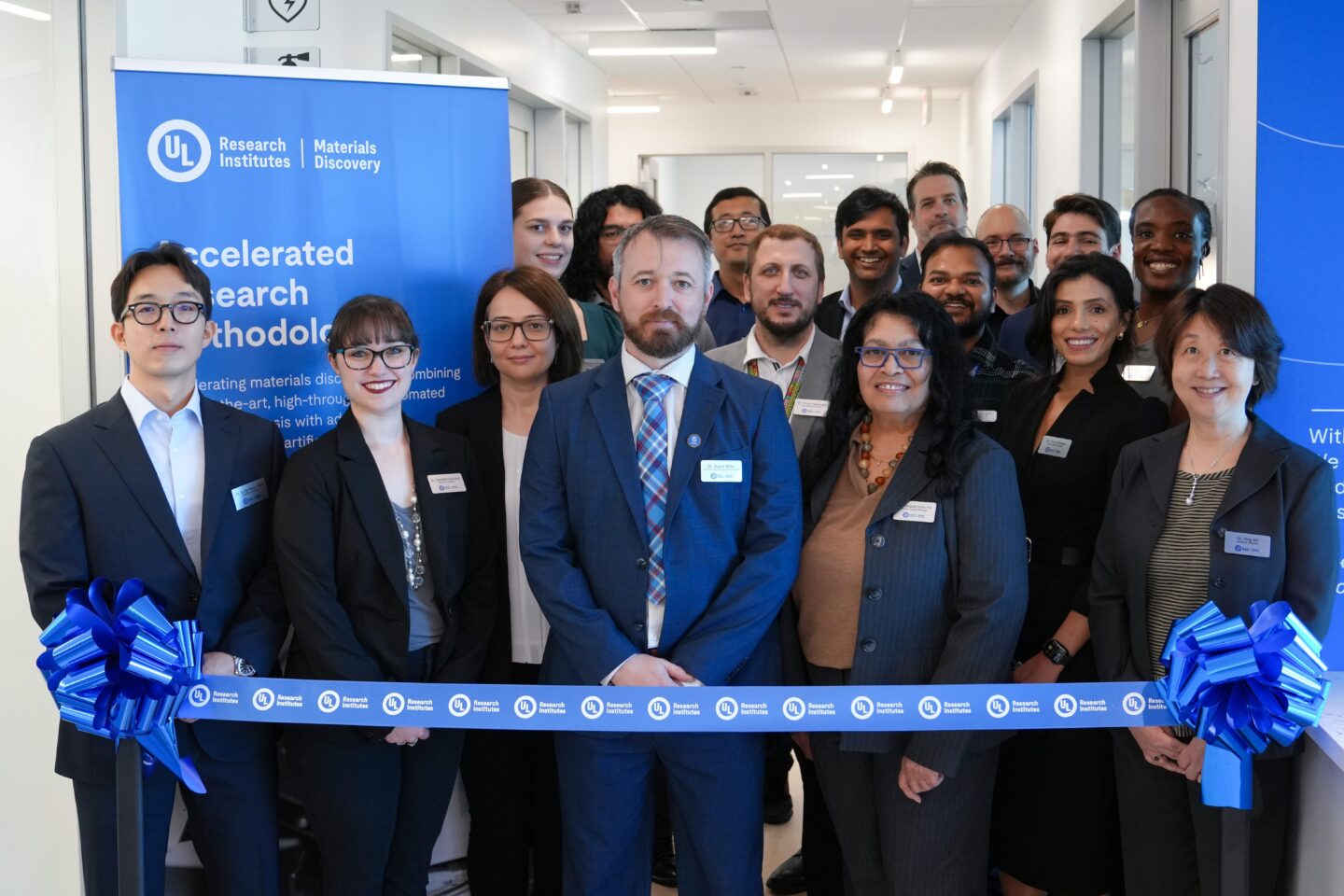
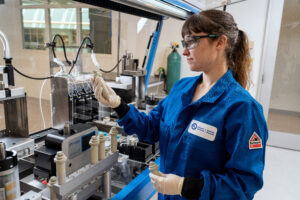
More specifically, she provided systems engineering insight for the design, construction and launch of the digital-first lab at ULRI’s Materials Discovery Research Institute — integrating more than $9 million in equipment. The laboratory harnesses AI, robotics, characterization, and prototyping to accelerate materials discovery for a safer world.
She also led the development of a digital data environment that replaced spreadsheet-driven processes with real-time visibility into the location, use, and lifecycle of equipment across ULRI laboratories.
“It feels good to do work that enables high impact, safety-focused science,” she said. “At ULRI, engineering is less about emergency response and more about strategic resolve.”
From unrecognized to award-winning engineer
The work itself hasn’t been Smith’s only career challenge. She entered the engineering field during a time when women in STEM were rare, and women of color in STEM were even more rare.
According to Smith, mentors helped her succeed. She said senior engineers — oftentimes men who had similarly aged daughters navigating the evolving workplace — would step in as advocates. Women colleagues were also supportive.
Despite the support, her technical authority, and her ever-increasing responsibilities, she said her contributions often went unrecognized. Still, that never stopped Smith from building systems that work.
“I tried to keep my head down and my chin up,” she said. “I was meticulous with my work; I only spoke when I knew I was right or if I could say, ‘I don’t know, but give me a day.’”
When Smith landed at ULRI in 2022, times had obviously changed from early in her career, and being a woman in STEM was less of an anomaly in the workforce. Today, she said she feels heard and valued, and the organization appreciates her versatile systems engineering background.
“I don’t have to wait for someone else in the room to validate me,” she said. “I’m supported and I can make a difference.”
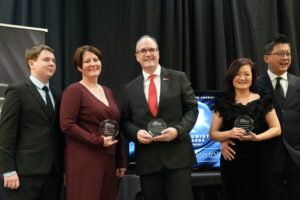
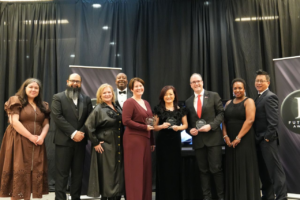
Smith is now getting the recognition she deserves — receiving the Becoming Everything You Are (BEYA) 2026 Science Spectrum Trailblazer Award, which honors individuals who are creating new paths in science, research and technology. In addition, ULRI has awarded Smith with several internal awards for her excellent work, including the ULRI Heart Award in 2024, and the ULRI Innovation and Impact Award in both 2025 and 2026.
“I never wanted status,” Smith said. “I’m just happy being me. But to be recognized by my coworkers and at the national level is very satisfying.”
To whom much is given, much is required
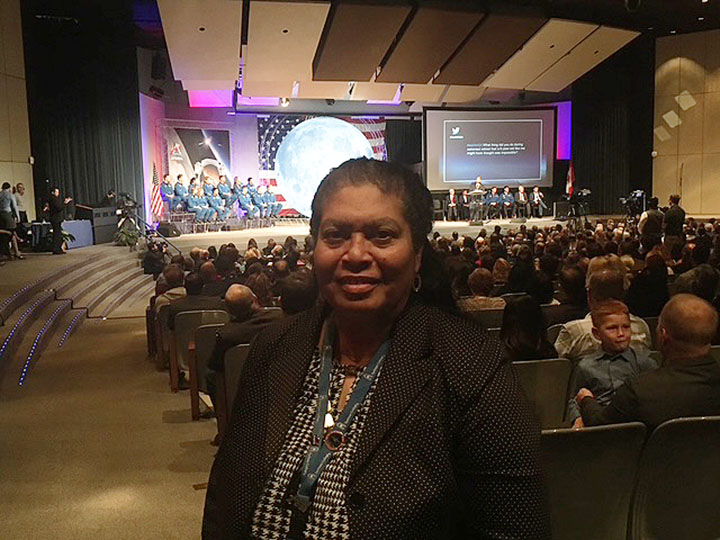
Smith refers to herself as “blessed beyond measure,” based on her personal and professional success. She is clear about what she was given —education, access, and opportunity — and the responsibility that comes with it. She lives by the adage, “to whom much is given, much is required.”
Throughout her career, she has volunteered extensively with youth organizations, encouraging young people to take an interest in engineering and the sciences and to pursue careers in those areas.
Smith has been involved with everything from science fairs and STEM Outreach programs to scouting and youth church organizations. In 2025, she was honored as a Living Legend in her community by the Blue Triangle Multicultural Association in Houston. The award is given to local citizens for their years of community and professional service.
“Our youth are the future,” she said. “If you don’t build from the bottom up, you have nothing,” — a fitting statement from someone who has helped build a space station, scientific laboratories, and a successful career from scratch.
PUBLISHED