Updated Search & Rescue Research for Single-Story Homes Now Available
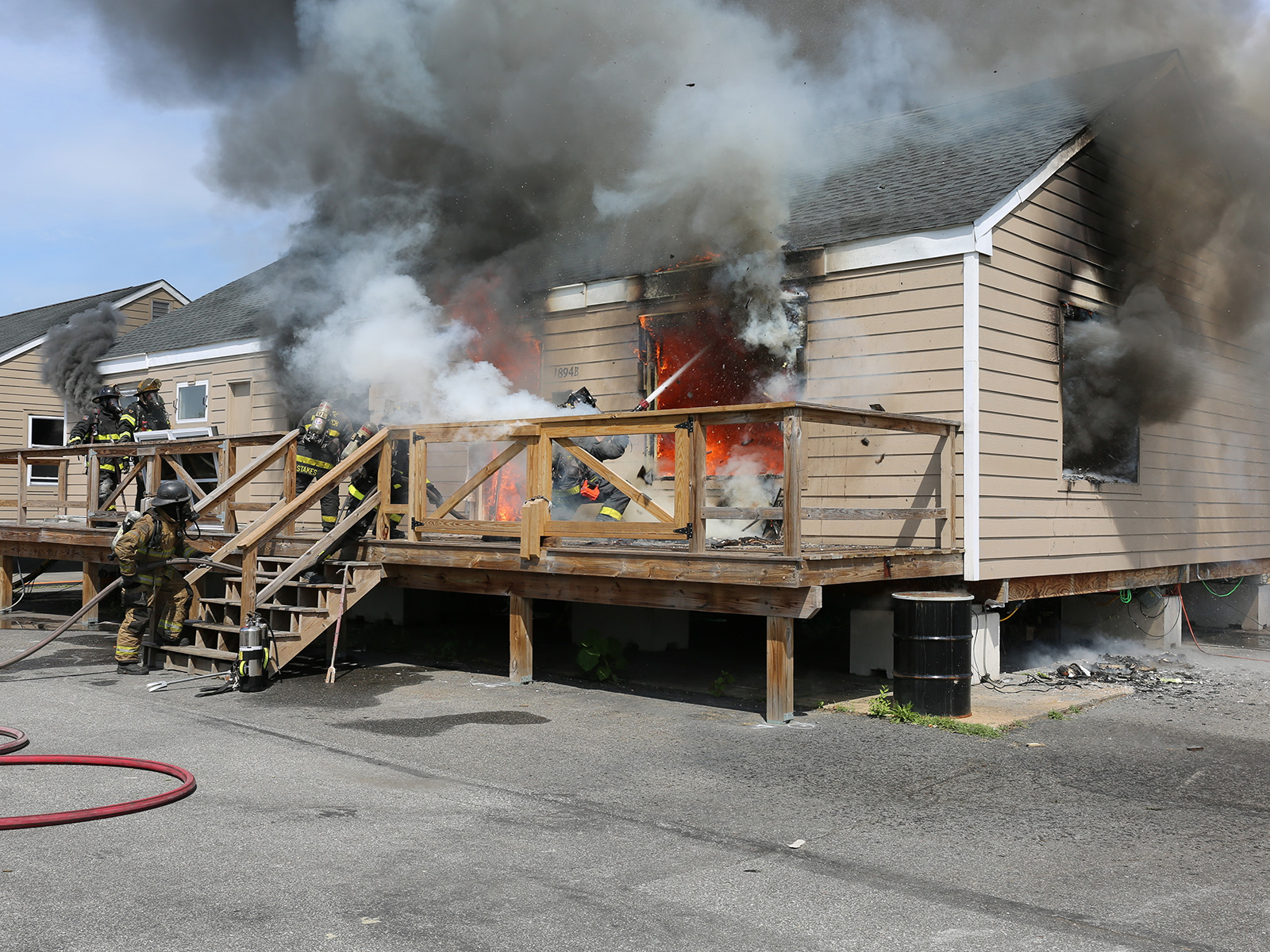
UL Research Institutes’ Fire Safety Research Institute has released a new technical report from the Study of Fire Service Residential Home Size‑up and Search & Rescue Operations project. The report builds on findings from the previous reports and adds three new tactical considerations based on additional analysis of full‑scale residential fire experiments designed to answer critical questions about how the fire service should coordinate search, suppression, and ventilation.
The three new tactical considerations include:
- Consider conducting simultaneous execution of exterior and interior suppression operations upon arrival of a fully developed fire with extension to the exterior,
- Consider locally ventilating compartments remote from the fire area as soon as possible (pre-suppression, this would include isolation of the compartment prior to ventilation), and
- Consider conducting hydraulic ventilation to increase the rate at which combustion gases exhaust from the structure after suppression.
These updates give the fire service clearer, evidence‑based guidance for the decisions they make every day. The findings also help prepare the fire service for the updated Search and Rescue Tactics in Single‑Story, Single‑Family Residential Structures course, which will launch later this spring to support improved training and operational effectiveness.
PUBLISHED
Tags